The benefits of RF microneedling, and what to expect
RF microneedling uses fine needles and radiofrequency energy to help firm and smooth skin, and I offer RF microneedling in Norwich at my clinic with a device called PureDerma. This post covers what it can realistically help with, what recovery is like, and how the devices on the market differ.
Benefits of RF microneedling
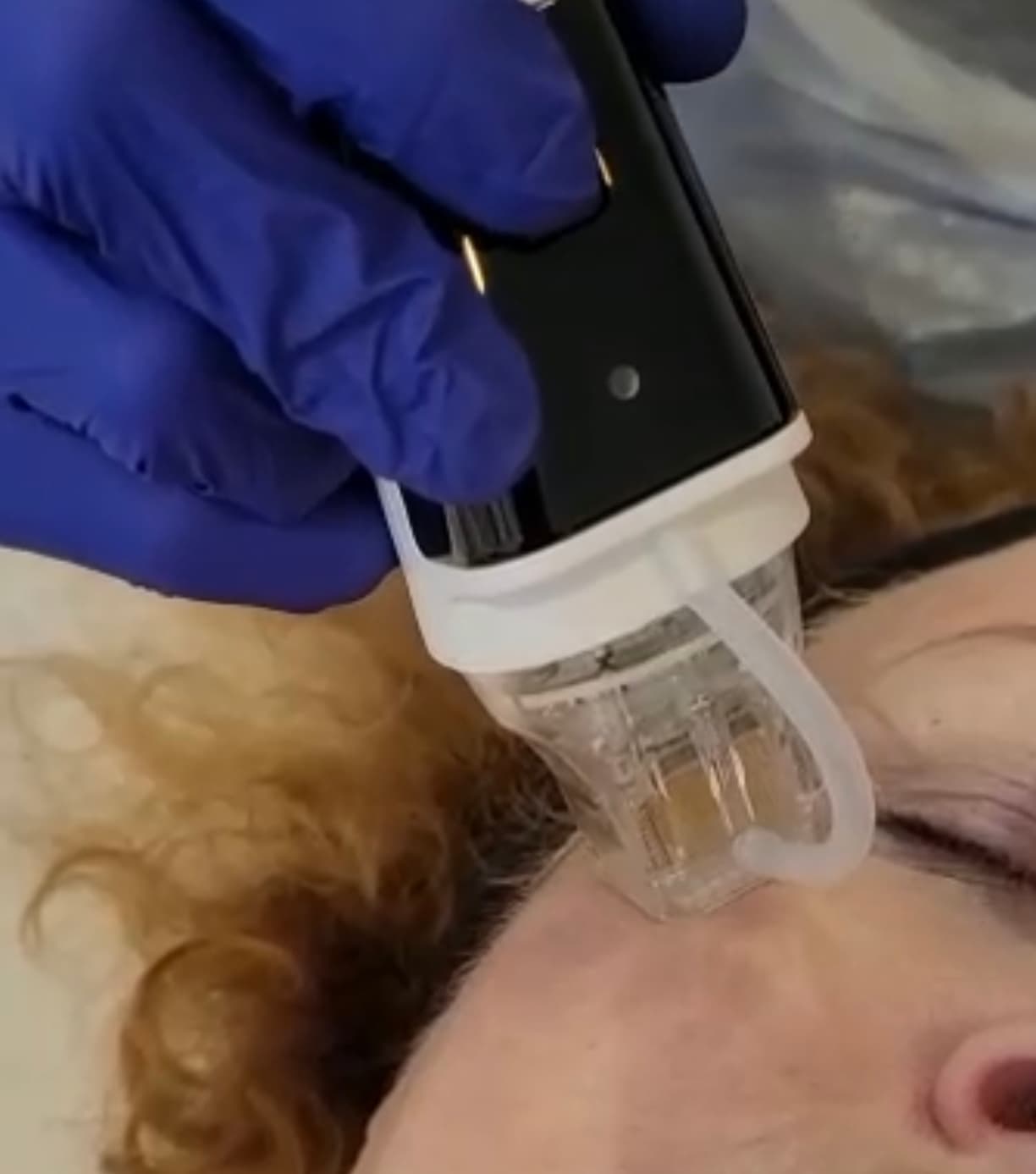
The needles make microscopic punctures in the skin, and radiofrequency energy travels through them to warm the tissue underneath. Your body answers by producing new collagen and elastin. No numbing cream is needed.
That process is behind the benefits people ask about. Skin can look and feel firmer and smoother, fine lines can soften, texture and tone can even out, and the look of acne scars and stretch marks can improve. It’s also used for looseness along the jawline and jowls, and for the lines across the neck that people call tech neck. Below the neck, the abdomen and stretch marks are the areas I’m asked about, and every area responds differently.
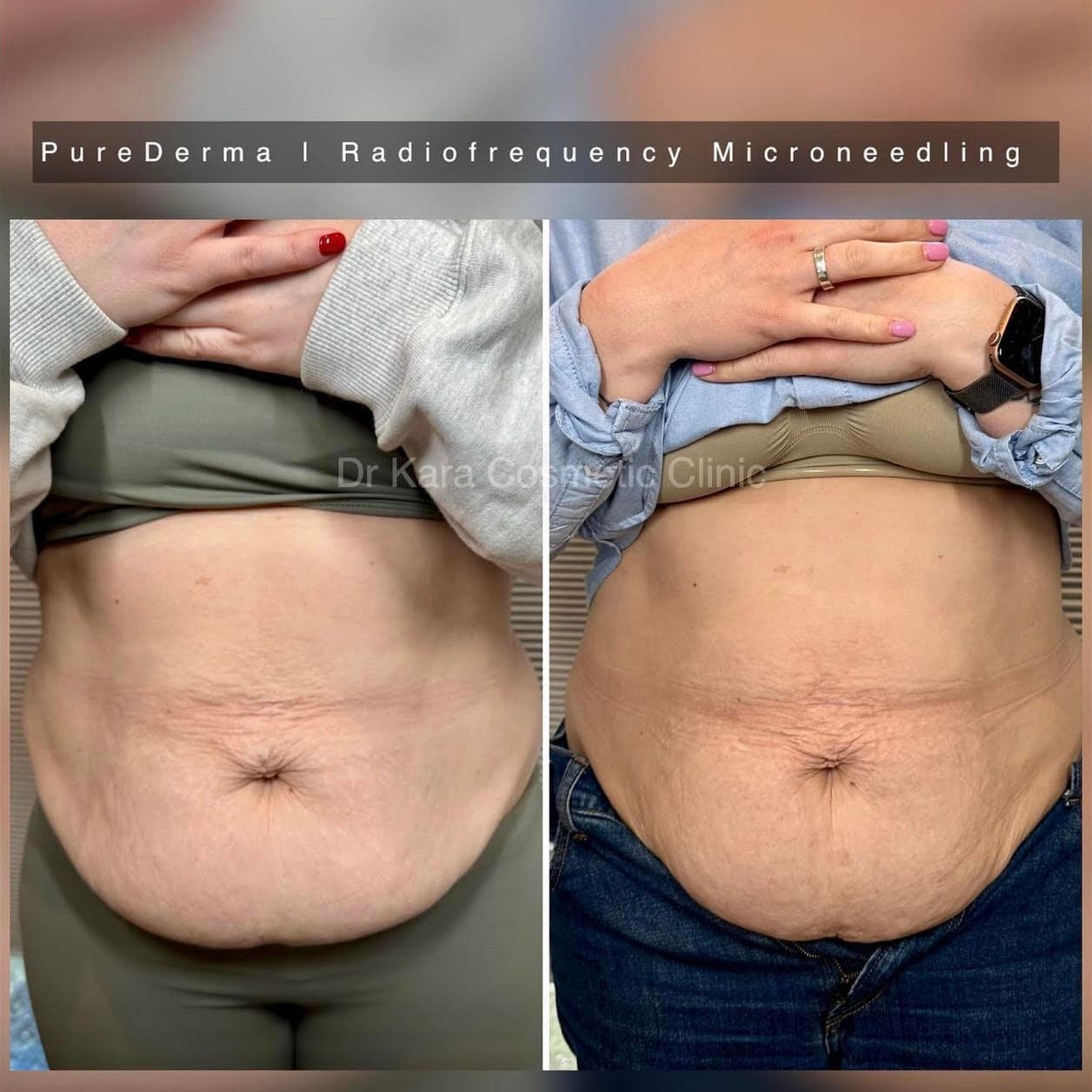
The change is gradual. New collagen takes time to build, so skin keeps changing for some months after a course rather than looking different the moment you leave. Results vary from person to person, and a course of treatments is usually advised. I plan three to six, then maintenance every three to six months.
Downtime is usually minimal. There are no incisions, and the appointment takes 30 to 60 minutes. Redness and swelling settle within a few hours to five days, and bruising can last a week or two.
What a treatment involves
You arrive make-up free, having taken paracetamol an hour beforehand. After consent and photographs, I clean the area and the treatment takes between 30 and 60 minutes. I work in a series of passes over the same area until the skin shows the response I’m looking for. PureDerma uses needles, but it isn’t usually painful, and any discomfort is generally very tolerable.
Afterwards your skin may look red and feel tight or tender, and some people itch. You’ll go home with aftercare instructions, and my guide to preparing for RF microneedling and aftercare has the full detail.
Who it may suit less well
RF microneedling isn’t surgery and won’t give you the result of surgery. If most of what bothers you is lost volume, another treatment may do more. If you need your skin to look settled within a day or two, the recovery time may not fit your diary. Some medical conditions and medicines also rule it out. I check all of this with you at a consultation before anything is booked.
FAQ
Is this the same as Morpheus8?
Morpheus8 is a radiofrequency microneedling device, and it isn’t the only one. Others include PureDerma, Secret RF and Focus Dual. I use PureDerma at my clinic.
What's the difference between monopolar, bipolar and multipolar radiofrequency?
Devices can deliver radiofrequency in a monopolar, bipolar or multipolar way. This describes how the energy reaches the skin’s tissues. Morpheus8 uses bipolar technology. PureDerma uses multipolar technology, and it also has a vacuum function to help deliver the treatment precisely.
What is the difference between insulated and non-insulated radiofrequency microneedles?
Non-insulated microneedles deliver radiofrequency along the whole length of the needle. Insulated needles deliver it only at the tip. So the two designs warm different areas of tissue. PureDerma uses non-insulated needles, and Morpheus8 uses insulated ones.
What is the best radiofrequency microneedling device to choose?
It depends mainly on the concerns you want to help with, and a practitioner who knows the devices is the best person to advise you. Worth weighing are your skin type, the results you’re after, the downtime you can accept and the technology in the device. I use PureDerma, and I’m happy to talk through my reasons at a consultation.
The short version
RF microneedling is a gradual treatment. It asks for a course of sessions and a few days of recovery, and it can help skin look firmer, smoother and more even over some months. It won’t replace surgery, and it won’t suit everyone. A consultation is where we find out whether it suits you, and the first consultation page explains what to expect.
References
References: Haedersdal, M., Togsverd–Bo, K., Wulf, H. C., & Togsverd, S. (2008). Histologic, ultrastructural, and clinical evaluation of a novel fractional radiofrequency device for skin rejuvenation. Lasers in Surgery and Medicine, 40(7), 524–532. https://doi.org/10.1002/lsm.20689 Saunders, S. M., & Glogau, R. G. (2007). Safety and efficacy of radiofrequency in skin rejuvenation. Seminars in Cutaneous Medicine and Surgery, 26(4), 242–247. https://doi.org/10.1016/j.sder.2007.09.004